EditorialCreativeSportsCollectionsVideos
Prices
0Log in

Visual content for professionals.
800M+ images and videos.

Content Hub

  • Current Events
  • Pictures of the Year
  • Sports
  • Editorial
  • Creative
  • Collections
  • Videos

Offers

  • Prices & Packages
  • Promotions
  • Enterprise
  • Newsletter
  • Blog
  • The Game Magazine

Services

  • Content Research
  • Contract Photography
  • API & FTP Push
  • my-picturemaxx
  • Become a Partner

Company

  • About IMAGO
  • Careers
  • News

Help Center

  • FAQ
  • Contact Us
Legal NoticeTerms & ConditionsLicense InformationData PrivacyPrivacy Settings
© 2026 IMAGO
CEPICBAPLABVPA
  1. Launch of the Mars Odyssey space probe; 25th anniversary on 24 October

Launch of the Mars Odyssey space probe; 25th anniversary on 24 October

Oct 24, 2026

The following photos have been selected for you by the IMAGO picture desk on this topic. For more pictures please use the search function.

Images in this collection
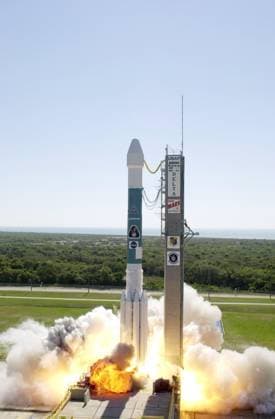
  • RECORD DATE NOT STATED The Boeing Delta II rocket carrying the 2001 Mars Odyssey spacecraft blasts into the clear blue sky from Launch Complex 17-A at Cape Canaveral Air Force Station. Liftoff occurred at 11 02 a.m. EDT. The launch sends the Mars Odyssey on an approximate 7-month journey to orbit the planet Mars. The spacecraft, built by Lockheed Martin Space Systems for the Jet Propulsion Laboratory, will map the Martian surface looking for geological features that could indicate the presence of water, now or in the past. Science gathered by three science instruments on board will be key to future missions to Mars, including orbital reconnaissance, lander and human missions Copyright: xpiemagsx piemagsnasaend23-15987 !ACHTUNG AUFNAHMEDATUM GESCHÄTZT!

    RECORD DATE NOT STATED The Boeing Delta II rocket carrying the 2001 Mars Odyssey spacecraft blasts into the clear blue sky from Launch Complex 17-A at Cape Canaveral Air Force Station. Liftoff occurred at 11 02 a.m. EDT. The launch sends the Mars Odyssey on an approximate 7-month journey to orbit the planet Mars. The spacecraft, built by Lockheed Martin Space Systems for the Jet Propulsion Laboratory, will map the Martian surface looking for geological features that could indicate the presence of water, now or in the past. Science gathered by three science instruments on board will be key to future missions to Mars, including orbital reconnaissance, lander and human missions Copyright: xpiemagsx piemagsnasaend23-15987 !ACHTUNG AUFNAHMEDATUM GESCHÄTZT!

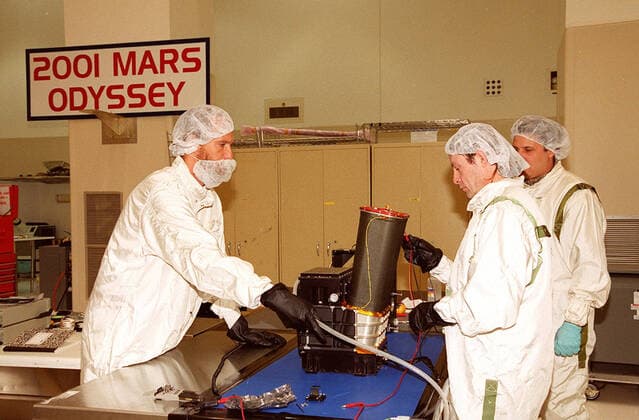
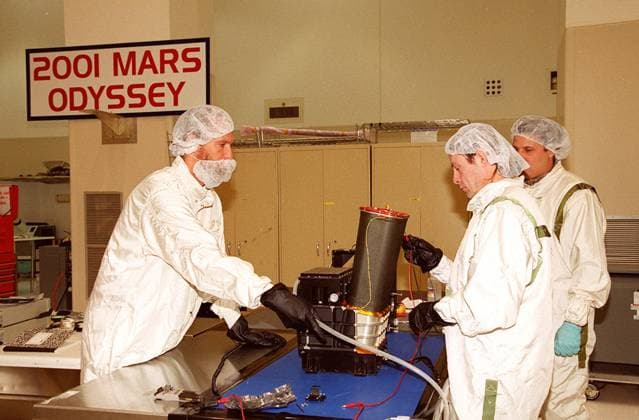
  • RECORD DATE NOT STATED In the Spacecraft Assembly and Encapsulation Facility 2, workers test the Thermal Emission Imaging System (THEMIS) before attaching to the 2001 Mars Odyssey Orbiter. THEMIS will map the mineralogy and morphology of the Martian surface using a high-resolution camera and a thermal infrared imaging spectrometer. The orbiter will carry three science instruments THEMIS, the Gamma Ray Spectrometer (GRS), and the Mars Radiation Environment Experiment (MARIE). The GRS will achieve global mapping of the elemental composition of the surface and determine the abundance of hydrogen in the shallow subsurface. The MARIE will characterize aspects of the near-space radiation environment with regards to the radiation-related risk to human explorers. The Mar Copyright: xpiemagsx piemagsnasaend23-15884 !ACHTUNG AUFNAHMEDATUM GESCHÄTZT!

    RECORD DATE NOT STATED In the Spacecraft Assembly and Encapsulation Facility 2, workers test the Thermal Emission Imaging System (THEMIS) before attaching to the 2001 Mars Odyssey Orbiter. THEMIS will map the mineralogy and morphology of the Martian surface using a high-resolution camera and a thermal infrared imaging spectrometer. The orbiter will carry three science instruments THEMIS, the Gamma Ray Spectrometer (GRS), and the Mars Radiation Environment Experiment (MARIE). The GRS will achieve global mapping of the elemental composition of the surface and determine the abundance of hydrogen in the shallow subsurface. The MARIE will characterize aspects of the near-space radiation environment with regards to the radiation-related risk to human explorers. The Mar Copyright: xpiemagsx piemagsnasaend23-15884 !ACHTUNG AUFNAHMEDATUM GESCHÄTZT!

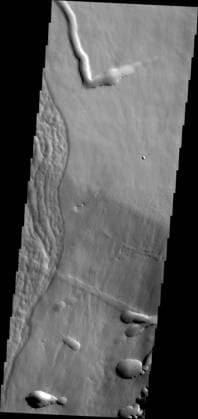
  • RECORD DATE NOT STATED This image captured by NASA s Mars Odyssey shows a portion of the flank of Pavonis Mons. Copyright: xpiemagsx piemagsnasaend23-1586 !ACHTUNG AUFNAHMEDATUM GESCHÄTZT!

    RECORD DATE NOT STATED This image captured by NASA s Mars Odyssey shows a portion of the flank of Pavonis Mons. Copyright: xpiemagsx piemagsnasaend23-1586 !ACHTUNG AUFNAHMEDATUM GESCHÄTZT!

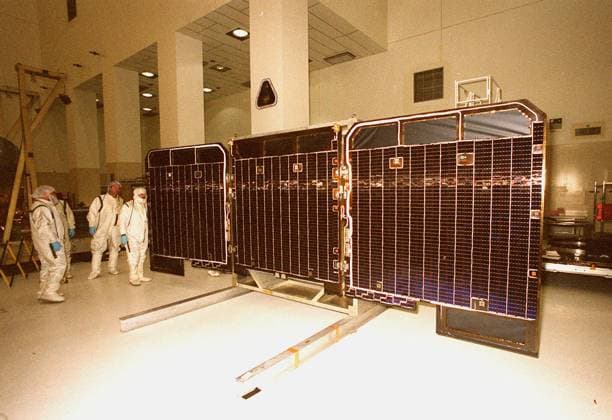
  • RECORD DATE NOT STATED Workers in the Spacecraft Assembly and Encapsulation Facility -2 make a visual check of the front side of the opened solar array panels from the 2001 Mars Odyssey Orbiter. The Mars Odyssey carries three science instruments the Thermal Emission Imaging System (THEMIS), the Gamma Ray Spectrometer (GRS), and the Mars Radiation Environment Experiment (MARIE). THEMIS will map the mineralogy and morphology of the Martian surface using a high-resolution camera and a thermal infrared imaging spectrometer. The GRS will achieve global mapping of the elemental composition of the surface and determine the abundance of hydrogen in the shallow subsurface. The GRS is a rebuild of the instrument lost with the Mars Observer mission. The MARIE will charact Copyright: xpiemagsx piemagsnasaend23-15681 !ACHTUNG AUFNAHMEDATUM GESCHÄTZT!

    RECORD DATE NOT STATED Workers in the Spacecraft Assembly and Encapsulation Facility -2 make a visual check of the front side of the opened solar array panels from the 2001 Mars Odyssey Orbiter. The Mars Odyssey carries three science instruments the Thermal Emission Imaging System (THEMIS), the Gamma Ray Spectrometer (GRS), and the Mars Radiation Environment Experiment (MARIE). THEMIS will map the mineralogy and morphology of the Martian surface using a high-resolution camera and a thermal infrared imaging spectrometer. The GRS will achieve global mapping of the elemental composition of the surface and determine the abundance of hydrogen in the shallow subsurface. The GRS is a rebuild of the instrument lost with the Mars Observer mission. The MARIE will charact Copyright: xpiemagsx piemagsnasaend23-15681 !ACHTUNG AUFNAHMEDATUM GESCHÄTZT!

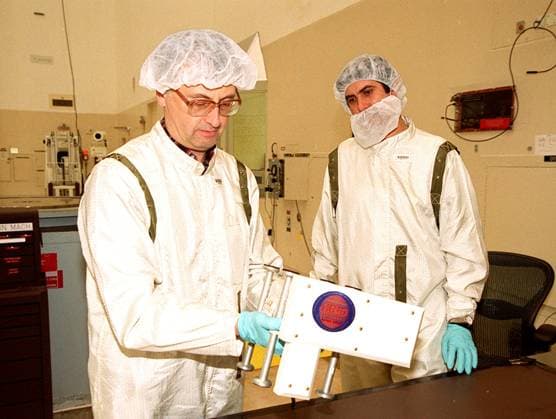
  • RECORD DATE NOT STATED Two Russian scientists look over the High Energy Neutron Detector (HEND), part of the Gamma Ray Spectrometer (GRS), after its removal from the 2001 Mars Odyssey Orbiter. The HEND was built by Russia™s Space Research Institute (IKI). The GRS will achieve global mapping of the elemental composition of the surface and determine the abundance of hydrogen in the shallow subsurface. The orbiter will carry two other science instruments THEMIS and the Mars Radiation Environment Experiment (MARIE). THEMIS will map the mineralogy and morphology of the Martian surface using a high-resolution camera and a thermal infrared imaging spectrometer. The MARIE will characterize aspects of the near-space radiation environment with regards to the radiation-re Copyright: xpiemagsx piemagsnasaend23-15661 !ACHTUNG AUFNAHMEDATUM GESCHÄTZT!

    RECORD DATE NOT STATED Two Russian scientists look over the High Energy Neutron Detector (HEND), part of the Gamma Ray Spectrometer (GRS), after its removal from the 2001 Mars Odyssey Orbiter. The HEND was built by Russia™s Space Research Institute (IKI). The GRS will achieve global mapping of the elemental composition of the surface and determine the abundance of hydrogen in the shallow subsurface. The orbiter will carry two other science instruments THEMIS and the Mars Radiation Environment Experiment (MARIE). THEMIS will map the mineralogy and morphology of the Martian surface using a high-resolution camera and a thermal infrared imaging spectrometer. The MARIE will characterize aspects of the near-space radiation environment with regards to the radiation-re Copyright: xpiemagsx piemagsnasaend23-15661 !ACHTUNG AUFNAHMEDATUM GESCHÄTZT!

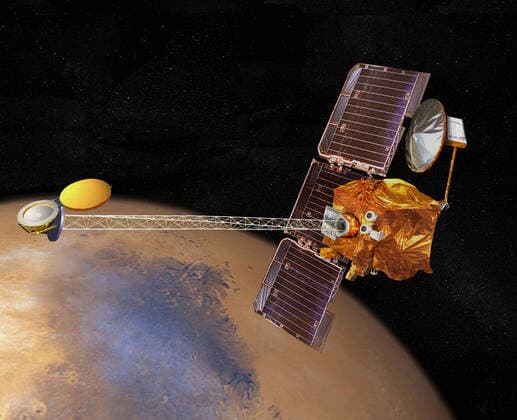
  • Artist s concept of 2001 Mars Odyssey spacecraft. Copyright: xpiemagsx piemagsspace-23673 !ACHTUNG AUFNAHMEDATUM GESCHÄTZT!

    Artist s concept of 2001 Mars Odyssey spacecraft. Copyright: xpiemagsx piemagsspace-23673 !ACHTUNG AUFNAHMEDATUM GESCHÄTZT!

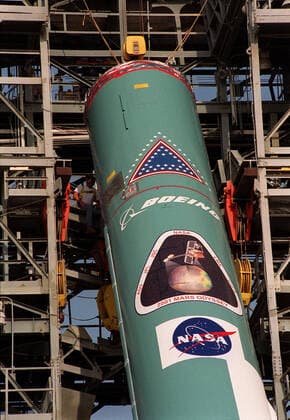
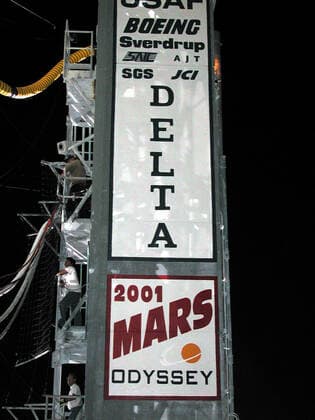
  • Signs on the side of the launch tower at Launch Complex 17, Cape Canaveral Air Force Station, show the nature of the impending launch. A worker on the side watches the umbilical connections to the Boeing Delta II rocket that is carrying the 2001 Mars Odyssey spacecraft. Liftoff is scheduled for 11:02 a.m. EDT from Launch Complex 17-A at Cape Canaveral Air Force Station. After an approximate 7-month journey, Mars Odyssey will orbit the planet Mars. The spacecraft, built by Lockheed Martin Space Systems for the Jet Propulsion Laboratory, will map the Martian surface looking for geological features that could indicate the presence of water, now or in the past. Science gathered by three science instruments on board will be key to future mission Copyright: xpiemagsx piemagsspace-17710 !ACHTUNG AUFNAHMEDATUM GESCHÄTZT!

    Signs on the side of the launch tower at Launch Complex 17, Cape Canaveral Air Force Station, show the nature of the impending launch. A worker on the side watches the umbilical connections to the Boeing Delta II rocket that is carrying the 2001 Mars Odyssey spacecraft. Liftoff is scheduled for 11:02 a.m. EDT from Launch Complex 17-A at Cape Canaveral Air Force Station. After an approximate 7-month journey, Mars Odyssey will orbit the planet Mars. The spacecraft, built by Lockheed Martin Space Systems for the Jet Propulsion Laboratory, will map the Martian surface looking for geological features that could indicate the presence of water, now or in the past. Science gathered by three science instruments on board will be key to future mission Copyright: xpiemagsx piemagsspace-17710 !ACHTUNG AUFNAHMEDATUM GESCHÄTZT!

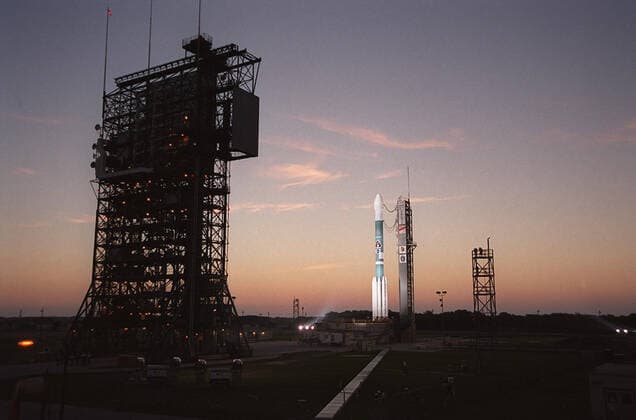
  • Dawn casts a pink glow as the Boeing Delta II rocket stands ready for launch after tower rollback. It is carrying the 2001 Mars Odyssey spacecraft that will begin its 7-month journey to Mars. Liftoff is scheduled for 11:02 a.m. EDT. The spacecraft, built by Lockheed Martin Space Systems for the Jet Propulsion Laboratory, will orbit Mars, mapping the surface looking for geological features that could indicate the presence of water, now or in the past. Science gathered by three science instruments on board will be key to future missions to Mars, including orbital reconnaissance, lander and human missions Copyright: xpiemagsx piemagsspace-17702 !ACHTUNG AUFNAHMEDATUM GESCHÄTZT!

    Dawn casts a pink glow as the Boeing Delta II rocket stands ready for launch after tower rollback. It is carrying the 2001 Mars Odyssey spacecraft that will begin its 7-month journey to Mars. Liftoff is scheduled for 11:02 a.m. EDT. The spacecraft, built by Lockheed Martin Space Systems for the Jet Propulsion Laboratory, will orbit Mars, mapping the surface looking for geological features that could indicate the presence of water, now or in the past. Science gathered by three science instruments on board will be key to future missions to Mars, including orbital reconnaissance, lander and human missions Copyright: xpiemagsx piemagsspace-17702 !ACHTUNG AUFNAHMEDATUM GESCHÄTZT!

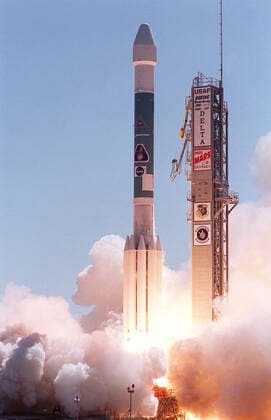
  • The Boeing Delta II rocket carrying the 2001 Mars Odyssey spacecraft leaps through the smoke into a clear blue sky. Liftoff occurred at 11:02 a.m. EDT. The launch sends the Mars Odyssey on an approximate 7-month journey to orbit the planet Mars. The spacecraft, built by Lockheed Martin Space Systems for the Jet Propulsion Laboratory, will map the Martian surface looking for geological features that could indicate the presence of water, now or in the past. Science gathered by three science instruments on board will be key to future missions to Mars, including orbital reconnaissance, lander and human missions Copyright: xpiemagsx piemagsspace-17700 !ACHTUNG AUFNAHMEDATUM GESCHÄTZT!

    The Boeing Delta II rocket carrying the 2001 Mars Odyssey spacecraft leaps through the smoke into a clear blue sky. Liftoff occurred at 11:02 a.m. EDT. The launch sends the Mars Odyssey on an approximate 7-month journey to orbit the planet Mars. The spacecraft, built by Lockheed Martin Space Systems for the Jet Propulsion Laboratory, will map the Martian surface looking for geological features that could indicate the presence of water, now or in the past. Science gathered by three science instruments on board will be key to future missions to Mars, including orbital reconnaissance, lander and human missions Copyright: xpiemagsx piemagsspace-17700 !ACHTUNG AUFNAHMEDATUM GESCHÄTZT!

  • In the early morning before dawn the 2001 Mars Odyssey spacecraft arrives at Launch Pad 17-A, Cape Canaveral Air Force Station. It will be mated with the Delta II rocket that will launch it. The spacecraft will map the Martian surface in search of geological features that could indicate the presence of water, now or in the past, and may contribute significantly toward understanding what will be necessary for a more sophisticated exploration of Mars. Launch is scheduled for 11:02 a.m. EDT April 7 Copyright: xpiemagsx piemagsspace-17475 !ACHTUNG AUFNAHMEDATUM GESCHÄTZT!

    In the early morning before dawn the 2001 Mars Odyssey spacecraft arrives at Launch Pad 17-A, Cape Canaveral Air Force Station. It will be mated with the Delta II rocket that will launch it. The spacecraft will map the Martian surface in search of geological features that could indicate the presence of water, now or in the past, and may contribute significantly toward understanding what will be necessary for a more sophisticated exploration of Mars. Launch is scheduled for 11:02 a.m. EDT April 7 Copyright: xpiemagsx piemagsspace-17475 !ACHTUNG AUFNAHMEDATUM GESCHÄTZT!

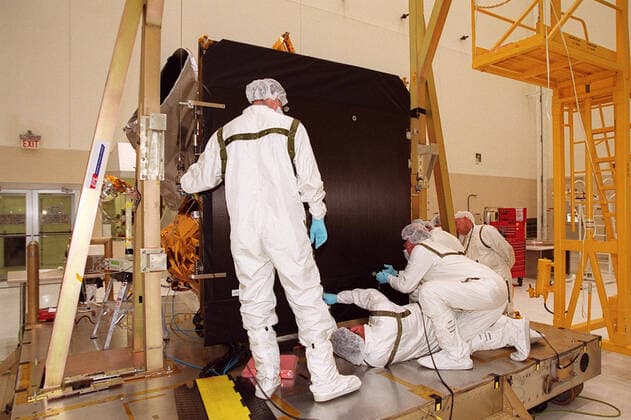
  • Workers in the Spacecraft Assembly and Encapsulation Facility (SAEF 2) reattach the solar panel on the 2001 Mars Odyssey Orbiter in order to conduct illumination testing. Scheduled for launch April 7, 2001, the orbiter contains three science instruments: THEMIS, the Gamma Ray Spectrometer (GRS), and the Mars Radiation Environment Experiment (MARIE). THEMIS will map the mineralogy and morphology of the Martian surface using a high-resolution camera and a thermal infrared imaging spectrometer. The GRS will achieve global mapping of the elemental composition of the surface and determine the abundance of hydrogen in the shallow subsurface. The MARIE will characterize aspects of the near-space radiation environment with regards to the radiation- Copyright: xpiemagsx piemagsspace-17260 !ACHTUNG AUFNAHMEDATUM GESCHÄTZT!

    Workers in the Spacecraft Assembly and Encapsulation Facility (SAEF 2) reattach the solar panel on the 2001 Mars Odyssey Orbiter in order to conduct illumination testing. Scheduled for launch April 7, 2001, the orbiter contains three science instruments: THEMIS, the Gamma Ray Spectrometer (GRS), and the Mars Radiation Environment Experiment (MARIE). THEMIS will map the mineralogy and morphology of the Martian surface using a high-resolution camera and a thermal infrared imaging spectrometer. The GRS will achieve global mapping of the elemental composition of the surface and determine the abundance of hydrogen in the shallow subsurface. The MARIE will characterize aspects of the near-space radiation environment with regards to the radiation- Copyright: xpiemagsx piemagsspace-17260 !ACHTUNG AUFNAHMEDATUM GESCHÄTZT!

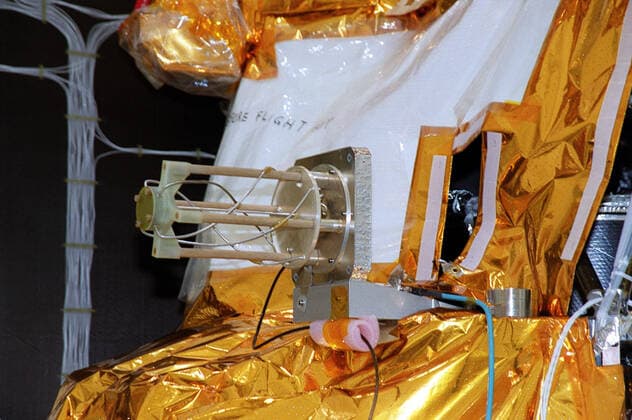
  • Shown in this closeup is the UHF antenna on the Mars Odyssey Orbiter. The antenna is undergoing testing in the Spacecraft Assembly and Encapsulation Facility (SAEF 2). The 2001 Mars Odyssey Orbiter, scheduled for launch April 7, 2001, contains three science instruments: THEMIS, the Gamma Ray Spectrometer (GRS), and the Mars Radiation Environment Experiment (MARIE). THEMIS will map the mineralogy and morphology of the Martian surface using a high-resolution camera and a thermal infrared imaging spectrometer. The GRS will achieve global mapping of the elemental composition of the surface and determine the abundance of hydrogen in the shallow subsurface. The MARIE will characterize aspects of the near-space radiation environment with regards t Copyright: xpiemagsx piemagsspace-17205 !ACHTUNG AUFNAHMEDATUM GESCHÄTZT!

    Shown in this closeup is the UHF antenna on the Mars Odyssey Orbiter. The antenna is undergoing testing in the Spacecraft Assembly and Encapsulation Facility (SAEF 2). The 2001 Mars Odyssey Orbiter, scheduled for launch April 7, 2001, contains three science instruments: THEMIS, the Gamma Ray Spectrometer (GRS), and the Mars Radiation Environment Experiment (MARIE). THEMIS will map the mineralogy and morphology of the Martian surface using a high-resolution camera and a thermal infrared imaging spectrometer. The GRS will achieve global mapping of the elemental composition of the surface and determine the abundance of hydrogen in the shallow subsurface. The MARIE will characterize aspects of the near-space radiation environment with regards t Copyright: xpiemagsx piemagsspace-17205 !ACHTUNG AUFNAHMEDATUM GESCHÄTZT!

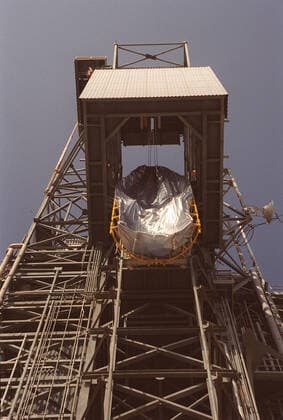
  • A piece of the fairing that will cover the Mars Odyssey Orbiter during rises up the gantry at Launch Pad 17-A, Cape Canaveral Air Force Station. The 2001 Mars Odyssey Orbiter is scheduled for launch on a Delta rocket April 7, 2001. Mars Odyssey contains three science instruments: THEMIS, the Gamma Ray Spectrometer (GRS), and the Mars Radiation Environment Experiment (MARIE). THEMIS will map the mineralogy and morphology of the Martian surface using a high-resolution camera and a thermal infrared imaging spectrometer. The GRS will achieve global mapping of the elemental composition of the surface and determine the abundance of hydrogen in the shallow subsurface. The MARIE will characterize aspects of the near-space radiation environment with Copyright: xpiemagsx piemagsspace-17070 !ACHTUNG AUFNAHMEDATUM GESCHÄTZT!

    A piece of the fairing that will cover the Mars Odyssey Orbiter during rises up the gantry at Launch Pad 17-A, Cape Canaveral Air Force Station. The 2001 Mars Odyssey Orbiter is scheduled for launch on a Delta rocket April 7, 2001. Mars Odyssey contains three science instruments: THEMIS, the Gamma Ray Spectrometer (GRS), and the Mars Radiation Environment Experiment (MARIE). THEMIS will map the mineralogy and morphology of the Martian surface using a high-resolution camera and a thermal infrared imaging spectrometer. The GRS will achieve global mapping of the elemental composition of the surface and determine the abundance of hydrogen in the shallow subsurface. The MARIE will characterize aspects of the near-space radiation environment with Copyright: xpiemagsx piemagsspace-17070 !ACHTUNG AUFNAHMEDATUM GESCHÄTZT!

  • The first stage of a Boeing Delta rocket is lifted into place in the gantry on Launch Pad 17-A, Cape Canaveral Air Force Station. The rocket will carry the 2001 Mars Odyssey Orbiter, scheduled for launch April 7, 2001. Mars Odyssey contains three science instruments: THEMIS, the Gamma Ray Spectrometer (GRS), and the Mars Radiation Environment Experiment (MARIE). THEMIS will map the mineralogy and morphology of the Martian surface using a high-resolution camera and a thermal infrared imaging spectrometer. The GRS will achieve global mapping of the elemental composition of the surface and determine the abundance of hydrogen in the shallow subsurface. The MARIE will characterize aspects of the near-space radiation environment with regards to t Copyright: xpiemagsx piemagsspace-17010 !ACHTUNG AUFNAHMEDATUM GESCHÄTZT!

    The first stage of a Boeing Delta rocket is lifted into place in the gantry on Launch Pad 17-A, Cape Canaveral Air Force Station. The rocket will carry the 2001 Mars Odyssey Orbiter, scheduled for launch April 7, 2001. Mars Odyssey contains three science instruments: THEMIS, the Gamma Ray Spectrometer (GRS), and the Mars Radiation Environment Experiment (MARIE). THEMIS will map the mineralogy and morphology of the Martian surface using a high-resolution camera and a thermal infrared imaging spectrometer. The GRS will achieve global mapping of the elemental composition of the surface and determine the abundance of hydrogen in the shallow subsurface. The MARIE will characterize aspects of the near-space radiation environment with regards to t Copyright: xpiemagsx piemagsspace-17010 !ACHTUNG AUFNAHMEDATUM GESCHÄTZT!

  • In the Spacecraft Assembly and Encapsulation Facility 2, workers test the Thermal Emission Imaging System (THEMIS) before attaching to the 2001 Mars Odyssey Orbiter. THEMIS will map the mineralogy and morphology of the Martian surface using a high-resolution camera and a thermal infrared imaging spectrometer. The orbiter will carry three science instruments: THEMIS, the Gamma Ray Spectrometer (GRS), and the Mars Radiation Environment Experiment (MARIE). The GRS will achieve global mapping of the elemental composition of the surface and determine the abundance of hydrogen in the shallow subsurface. The MARIE will characterize aspects of the near-space radiation environment with regards to the radiation-related risk to human explorers. The Ma Copyright: xpiemagsx piemagsspace-16475 !ACHTUNG AUFNAHMEDATUM GESCHÄTZT!

    In the Spacecraft Assembly and Encapsulation Facility 2, workers test the Thermal Emission Imaging System (THEMIS) before attaching to the 2001 Mars Odyssey Orbiter. THEMIS will map the mineralogy and morphology of the Martian surface using a high-resolution camera and a thermal infrared imaging spectrometer. The orbiter will carry three science instruments: THEMIS, the Gamma Ray Spectrometer (GRS), and the Mars Radiation Environment Experiment (MARIE). The GRS will achieve global mapping of the elemental composition of the surface and determine the abundance of hydrogen in the shallow subsurface. The MARIE will characterize aspects of the near-space radiation environment with regards to the radiation-related risk to human explorers. The Ma Copyright: xpiemagsx piemagsspace-16475 !ACHTUNG AUFNAHMEDATUM GESCHÄTZT!

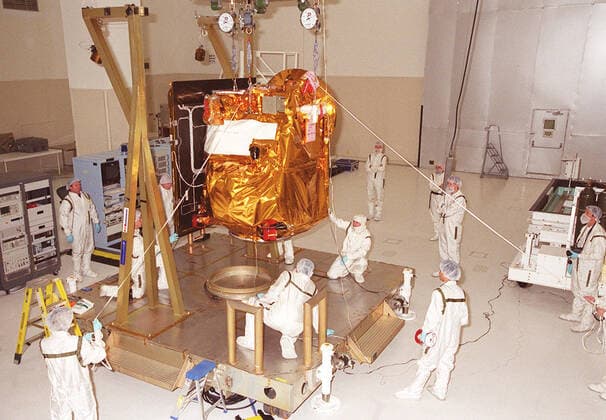
  • In the Spacecraft Assembly & Encapsulation Facility -2, workers help guide the <a href=http: mars.jpl.nasa.gov 2001 >2001 Mars Odyssey Orbiter < a>as it is lowered to a workstand. The Mars Odyssey Orbiter carries three science instruments: the Thermal Emission Imaging System (THEMIS), the Gamma Ray Spectrometer (GRS), and the Mars Radiation Environment Experiment (MARIE). THEMIS will map the mineralogy and morphology of the Martian surface using a high-resolution camera and a thermal infrared imaging spectrometer. The GRS will achieve global mapping of the elemental composition of the surface and determine the abundance of hydrogen in the shallow subsurface. The GRS is a rebuild of the instrument lost with the Mars Observer mission. The Copyright: xpiemagsx piemagsspace-16295 !ACHTUNG AUFNAHMEDATUM GESCHÄTZT!

    In the Spacecraft Assembly & Encapsulation Facility -2, workers help guide the <a href=http: mars.jpl.nasa.gov 2001 >2001 Mars Odyssey Orbiter < a>as it is lowered to a workstand. The Mars Odyssey Orbiter carries three science instruments: the Thermal Emission Imaging System (THEMIS), the Gamma Ray Spectrometer (GRS), and the Mars Radiation Environment Experiment (MARIE). THEMIS will map the mineralogy and morphology of the Martian surface using a high-resolution camera and a thermal infrared imaging spectrometer. The GRS will achieve global mapping of the elemental composition of the surface and determine the abundance of hydrogen in the shallow subsurface. The GRS is a rebuild of the instrument lost with the Mars Observer mission. The Copyright: xpiemagsx piemagsspace-16295 !ACHTUNG AUFNAHMEDATUM GESCHÄTZT!

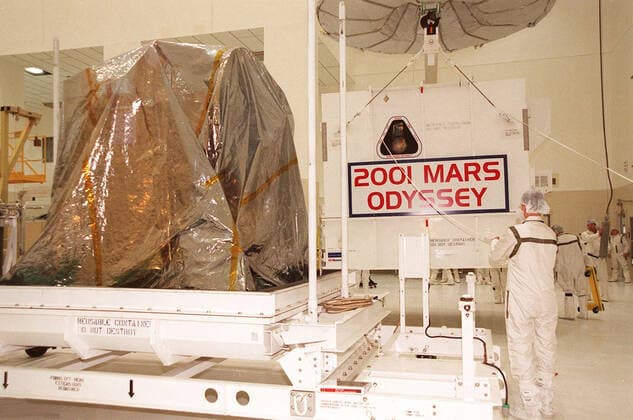
  • Workers in the Spacecraft Assembly and Encapsulation Facility 2 move the shipping crate away from the 2001 Mars Odyssey spacecraft, at left on the stand. Odyssey is still covered by a protective sheet. The spacecraft, which arrived from Denver, Colo., Jan. 4, will undergo final assembly and checkout in the SAEF-2. That includes installation of two of the three science instruments, integration of the three-panel solar array, and a spacecraft functional test. Launch aboard a Boeing Delta II launch vehicle from Pad A, Complex 17, CCAFS, is planned for April 7, 2001 the first day of a 21-day planetary window. The spacecraft will arrive at Mars on Oct. 20, 2001, for insertion into an initial elliptical capture orbit. Its final operational altitu Copyright: xpiemagsx piemagsspace-16267 !ACHTUNG AUFNAHMEDATUM GESCHÄTZT!
    Workers in the Spacecraft Assembly and Encapsulation Facility 2 move the shipping crate away from the 2001 Mars Odyssey spacecraft, at left on the stand. Odyssey is still covered by a protective sheet. The spacecraft, which arrived from Denver, Colo., Jan. 4, will undergo final assembly and checkout in the SAEF-2. That includes installation of two of the three science instruments, integration of the three-panel solar array, and a spacecraft functional test. Launch aboard a Boeing Delta II launch vehicle from Pad A, Complex 17, CCAFS, is planned for April 7, 2001 the first day of a 21-day planetary window. The spacecraft will arrive at Mars on Oct. 20, 2001, for insertion into an initial elliptical capture orbit. Its final operational altitu Copyright: xpiemagsx piemagsspace-16267 !ACHTUNG AUFNAHMEDATUM GESCHÄTZT!
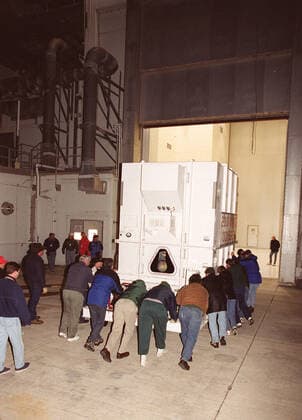
  • Workers push the crated 2001 Mars Odyssey spacecraft toward the Spacecraft Assembly and Encapsulation Facility 2 (SAEF-2) located in the KSC Industrial Area. The spacecraft arrived at KSC™s Shuttle Landing Facility aboard an Air Force C-17 cargo airplane that brought it from Denver, Colo.., location of the Lockheed Martin plant where the spacecraft was built. In the SAEF, Odyssey will undergo final assembly and checkout. This includes installation of two of the three science instruments, integration of the three-panel solar array, and a spacecraft functional test. It will be fueled and then mated to an upper stage booster, the final activities before going to the launch pad. Launch is planned for April 7, 2001 the first day of a 21-day pl Copyright: xpiemagsx piemagsspace-16263 !ACHTUNG AUFNAHMEDATUM GESCHÄTZT!
    Workers push the crated 2001 Mars Odyssey spacecraft toward the Spacecraft Assembly and Encapsulation Facility 2 (SAEF-2) located in the KSC Industrial Area. The spacecraft arrived at KSC™s Shuttle Landing Facility aboard an Air Force C-17 cargo airplane that brought it from Denver, Colo.., location of the Lockheed Martin plant where the spacecraft was built. In the SAEF, Odyssey will undergo final assembly and checkout. This includes installation of two of the three science instruments, integration of the three-panel solar array, and a spacecraft functional test. It will be fueled and then mated to an upper stage booster, the final activities before going to the launch pad. Launch is planned for April 7, 2001 the first day of a 21-day pl Copyright: xpiemagsx piemagsspace-16263 !ACHTUNG AUFNAHMEDATUM GESCHÄTZT!
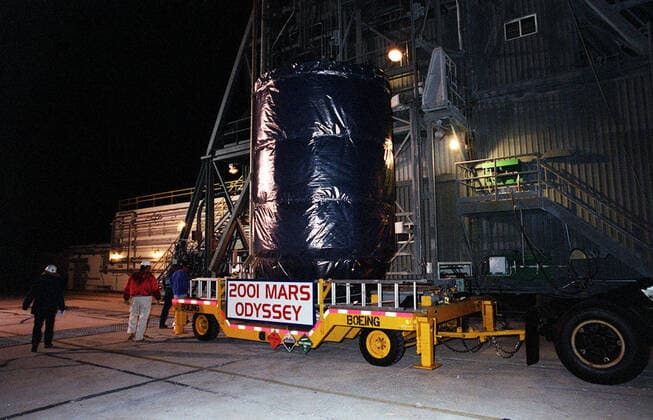
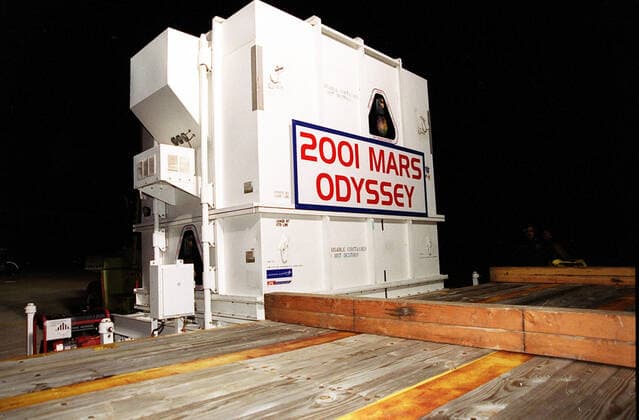
  • The 2001 Mars Odyssey spacecraft sits on the bed of the trailer that will take it from KSC™s Shuttle Landing Facility to the Spacecraft Assembly and Encapsulation Facility 2 (SAEF-2) located in the KSC Industrial Area. The spacecraft arrived at the SLF aboard an Air Force C-17 cargo airplane that brought it from Denver, Colo.., location of the Lockheed Martin plant where the spacecraft was built. In the SAEF Odyssey will undergo final assembly and checkout. This includes installation of two of the three science instruments, integration of the three-panel solar array, and a spacecraft functional test. It will be fueled and then mated to an upper stage booster, the final activities before going to the launch pad. Launch is planned for April Copyright: xpiemagsx piemagsspace-16260 !ACHTUNG AUFNAHMEDATUM GESCHÄTZT!
    The 2001 Mars Odyssey spacecraft sits on the bed of the trailer that will take it from KSC™s Shuttle Landing Facility to the Spacecraft Assembly and Encapsulation Facility 2 (SAEF-2) located in the KSC Industrial Area. The spacecraft arrived at the SLF aboard an Air Force C-17 cargo airplane that brought it from Denver, Colo.., location of the Lockheed Martin plant where the spacecraft was built. In the SAEF Odyssey will undergo final assembly and checkout. This includes installation of two of the three science instruments, integration of the three-panel solar array, and a spacecraft functional test. It will be fueled and then mated to an upper stage booster, the final activities before going to the launch pad. Launch is planned for April Copyright: xpiemagsx piemagsspace-16260 !ACHTUNG AUFNAHMEDATUM GESCHÄTZT!
Collections
Upcoming